Thinking about a backyard pool in Vail or getting ready to sell a home that has one? Keeping your pool sparkling is only half the job. You also need to meet Pima County code so you protect people, avoid fines, and keep your closing on track. In this guide, you’ll learn what rules apply in unincorporated Pima County, how to pass a barrier inspection, and how to drain and maintain your pool the right way in our desert climate. Let’s dive in.
Know the local rules
If your property is in unincorporated Vail, your pool is regulated by Pima County Development Services. In‑ground pools and most related work require permits, plan review, and inspections. Review the county’s checklist before you start or when verifying an existing pool’s history using Pima County’s page for Custom Pools permit requirements.
Public and semi‑public pools, like HOA or apartment pools, are reviewed by the county’s environmental department and have additional standards. Private residential pools do not need an operating permit, but they must meet building and barrier rules.
Pima County has announced a planned adoption of newer building codes effective January 1, 2026. If your project is close to that date, confirm which code edition applies with Development Services.
Planning a new pool or remodel
Before you build or update your pool, gather the basics:
- A scaled site plan that shows the pool, equipment, setbacks, fences, utilities, grading, and septic components if present.
- Structural, electrical, and plumbing plans. Pima County requires an electrical plan that includes bonding and grounding details plus any heater specs.
- Equipment specifications, including pump data and panel schedules.
- The correct submittal checklist from Pima County’s Custom Pools page.
Pass the barrier check
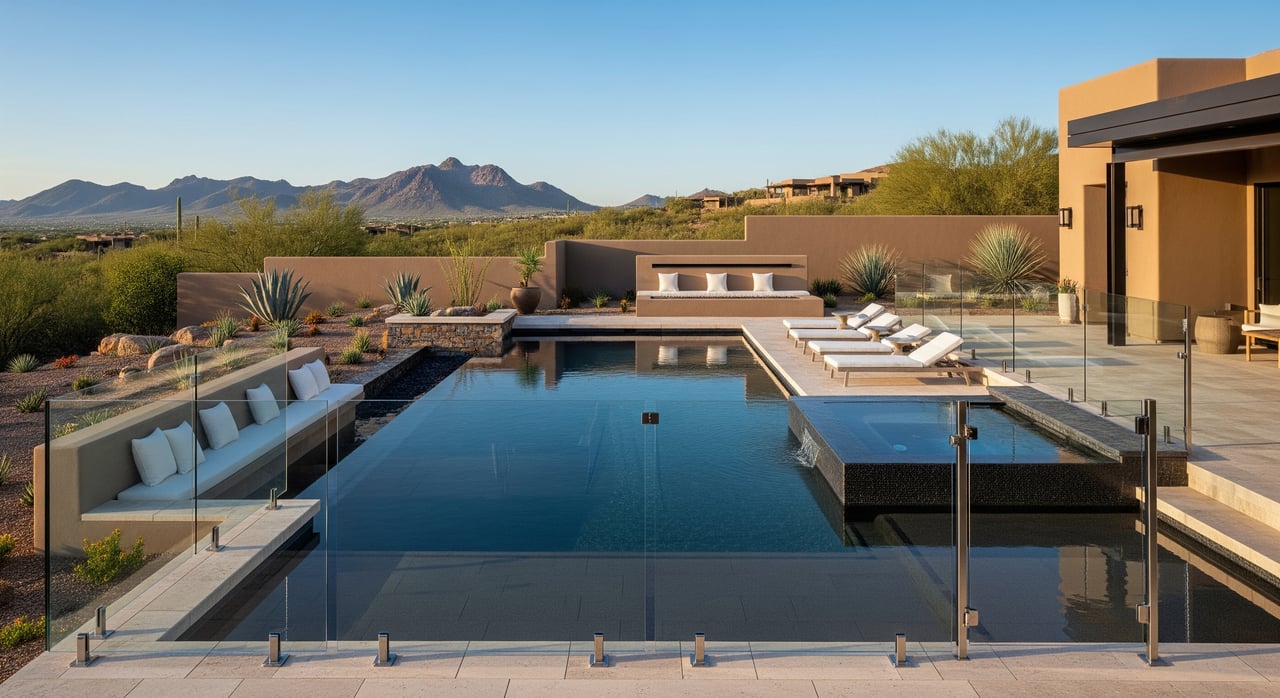
Pima County’s barrier rules are specific and enforceable. Before you list or move in, make sure your fence, gates, and any doors or windows that access the pool area meet county criteria outlined in the Barriers for Residential Pools and Spas guide.
Key highlights:
- Minimum fence height is 48 inches measured from the outside of the barrier.
- Maximum gap under the fence is 2 inches on the outside. Openings must not allow a 4‑inch sphere to pass.
- Pedestrian gates must open away from the pool, self‑close, and self‑latch. If the latch is under 54 inches high, the release must be on the pool side and set at least 3 inches below the top of the gate.
- If your home’s wall forms part of the barrier, doors and windows with direct access to the pool need alarms or other approved protection that prevents a 4‑inch opening.
- A spa or hot tub with a locking safety cover that meets ASTM F1346 can sometimes substitute for a fence when approved by the county.
Also check drain safety. The Virginia Graeme Baker Act set standards for anti‑entrapment. While enforcement focuses on public pools, it is a smart safety upgrade for any home to have compliant drain covers and, for single drains, a secondary device. Learn more about the VGBA safety law.
Quick check for buyers and sellers
- Inspect fence height, gaps, and gate function. The gate should swing out, self‑close, and latch on its own.
- Test door or window alarms if the house forms part of the barrier.
- Verify a spa cover is lockable and labeled as ASTM F1346 compliant if you rely on it for safety.
- Confirm electrical bonding and GFCI protection were installed and inspected. Use your home inspection to flag visible issues, then consult a licensed pro.
Drain and backwash correctly
Improper draining can harm landscaping and washes and can lead to violations. In our area, the preferred option is the sanitary sewer when available. Tucson and Pima County guidance support this method when done slowly through your private cleanout. Review the City of Tucson’s instructions for pool and spa owners and the regional guidance from Oro Valley’s Drain Your Pool Guidelines for specifics.
What to know:
- Preferred route: discharge to the sanitary sewer via your cleanout, and pump at a slow rate during low‑use hours.
- Outdoor discharge: only if water is dechlorinated, clear, pH balanced, and can stay on your property. Do not let water enter streets, washes, or storm drains.
- Saltwater pools: outdoor draining is generally not allowed because salt damages plants and infrastructure.
- Filter backwash: let it infiltrate on your property without runoff, or use the sewer if local utility guidance allows.
- Septic systems: do not send pool water or large volumes of backwash into a septic tank.
Before draining, test free chlorine and pH and dechlorinate if needed. The Oro Valley guidance provides practical steps to do this safely.
Maintain for desert climate
Southern Arizona heat and sun increase evaporation and sanitizer demand. Keep chemistry in range and adjust routines for monsoon dust and summer UV.
- Chemistry targets: the CDC recommends free chlorine about 1.0 to 3.0 ppm and pH 7.2 to 7.8. Review the CDC’s healthy swimming guidance.
- Circulation: run your pump long enough to achieve a full turnover each day. Many owners increase runtime in hot months. Variable‑speed pumps can reduce electricity use and are commonly required in new installs. Pima County asks for pump and electrical data in pool submittals, which you can see on the Custom Pools checklist.
- Cover up: a solar or automatic cover reduces evaporation and chemical loss, which saves water and money.
- After storms: expect extra skimming, vacuuming, and filter cleaning after monsoon winds and dust.
- Stabilizer: cyanuric acid protects chlorine from sunlight, but too much can reduce effectiveness. Test regularly and adjust with a pro’s help.
- Chlorine vs salt systems: salt‑chlorine generators create chlorine on site and reduce tablet handling, but the salt can be corrosive and cells need replacement. Learn the tradeoffs from this overview of how saltwater pools work.
HOA and resale tips
HOAs often require architectural approval for pools and fences. Their rules can be stricter than county code. Before you buy or list, request written confirmation of approvals and any open violations, and keep copies for your files. The City of Tucson’s permit guidance also reminds owners to verify approvals during transactions. Review the city’s permit and exemption information.
For sellers, gather permit and final inspection records for the pool, barrier, heater, and equipment. For buyers, ask for permit history and plan a thorough inspection that covers barrier dimensions, latches, alarms, visible drain covers, and equipment bonding.
Ready for next step?
Whether you are buying, selling, or considering a vacation‑rental setup with a pool, you deserve local guidance that blends hospitality and compliance. If you want a second set of eyes on barrier basics, draining plans, or HOA approvals, reach out to Laurie Wilson for friendly, practical help.
FAQs
What pool fence and gate rules apply in Vail?
- Pima County requires a 48‑inch‑high barrier, tight openings that block a 4‑inch sphere, and outward‑swinging gates that self‑close and self‑latch; see the county’s barrier guide for details.
Where can I legally drain my Vail pool?
- Preferred discharge is to the sanitary sewer through your private cleanout; outdoor discharge requires dechlorinated, pH‑balanced water that stays on your property and never enters streets, washes, or storm drains.
Do I need a permit to build a residential pool?
- Yes, in‑ground pools and many related items need permits, plans, and inspections from Pima County Development Services; start with the Custom Pools checklist.
Are saltwater pools allowed to drain outdoors?
- Generally no, because salt harms landscaping and infrastructure; use the sanitary sewer or consult local utility guidance before draining.
What chemistry levels should I maintain in summer?
- Aim for about 1.0 to 3.0 ppm free chlorine and pH 7.2 to 7.8, and test more often during hot, high‑use months.
How do HOAs affect my pool project or sale?
- Most HOAs require architectural approval for pools and fences, so request written confirmation of approvals and any violations before closing to avoid delays.