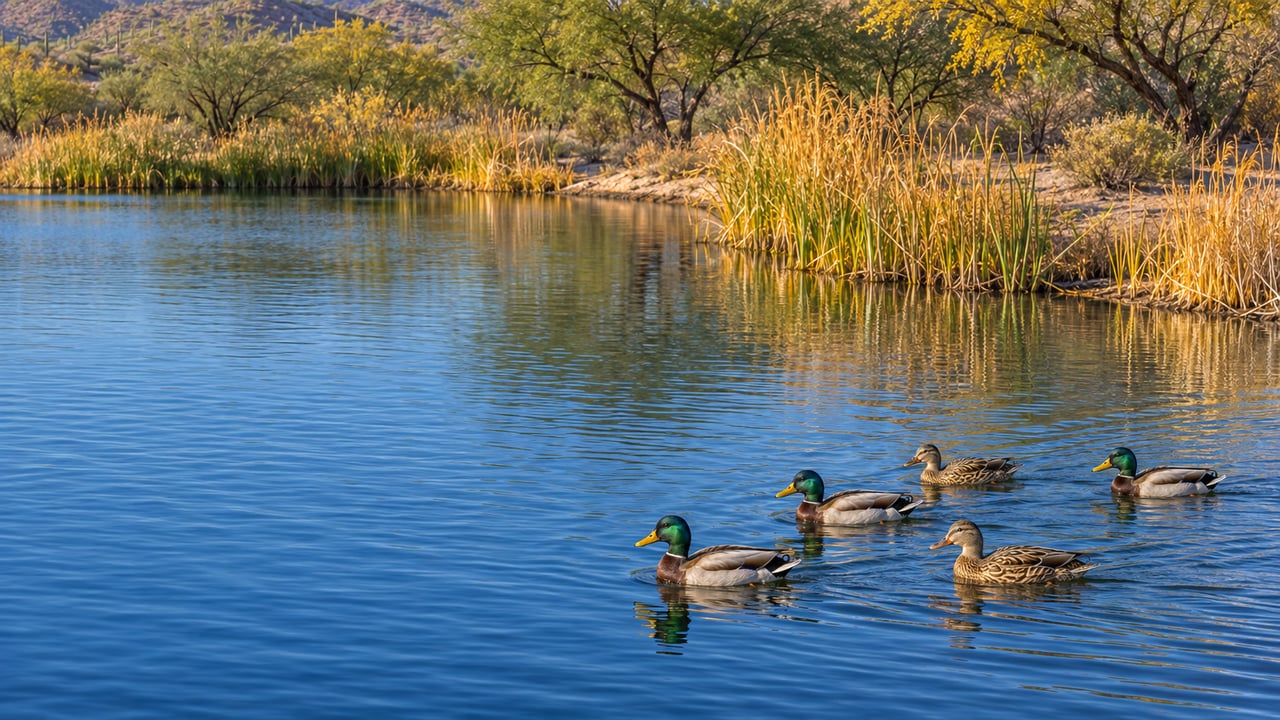
Birders at El Rio Preserve logged Northern Shovelers, Ring-necked Ducks and a Belted Kingfisher on Nov. 9. The same pond now holds 183 endangered fish. Each is usually less than three inches long and silvery gray, and as of this week they have been in the pond for three weeks.
On Oct. 29, the Arizona Game and Fish Department released those Desert Pupfish into the 9-acre pond at 10190 N. Coachline Blvd. under a Safe Harbor Agreement with the Town of Marana, according to the Town of Marana's announcement. The fish came in on a cold-water calendar, and the pond has two jobs that follow two different seasons. Winter belongs to the birds. The fish's breeding colors come with the warm water of spring, and so does a new course next door.
The Pond Got a Tune-Up Before the Fish Moved In
Marana Parks & Recreation staff prepared the pond before Game and Fish brought the pupfish. According to the town, the work included:
- Improving overall pond conditions
- Fixing seepage problems
- Reinforcing the berm
- Managing aquatic vegetation
- Installing an aeration system to improve water quality and habitat
Natural Resources Supervisor Jason Grodman called the release "a significant accomplishment for the Town" in the same announcement. He tied it to the town's work on conservation and habitat management. The town's own El Rio Preserve FAQ says the water is stormwater runoff plus occasional overflow from the Santa Cruz River, and that the area "was created for waterfowl and other wildlife." The pond now has an endangered fish to support as well as birds, and the aeration and berm work serve both.
A Fish That Shows Off in Warm Water
The bright blue color Desert Pupfish are known for appears only during breeding season. The Arizona Game and Fish Department describes it this way:
"During breeding season, males turn bright blue with yellow tails and aggressively defend their territory."
The U.S. Fish and Wildlife Service species profile says Desert Pupfish breed "in the spring and early summer." A 2021 review by the California Department of Fish and Wildlife puts egg-laying "typically from late March to late September." It says male aggression shows up when the water is warmer than about 20°C, which is roughly 68°F. The same review says males hold territories most consistently from mid-April through October.
So the El Rio pupfish arrived at the tail end of their season. They are built for this. Game and Fish says the species handles extreme heat and cold, low oxygen and salty water. Through December and January, though, the pond's newest residents are small, silvery fish in cool water, and the blue males are a sight for spring. If you walk the loop this winter, the surface is where most of the movement will be.
Who Is Already on the Water
The Tucson Birding Trail profile of El Rio suggests fall and winter visits for flycatchers, waterfowl and shorebirds. It also suggests watching the volcanic ridge on the west side for soaring raptors. The preserve's eBird hotspot page shows 274 species and more than 12,400 checklists, so plenty of local birders already keep track of it.
Here is what birders reported at El Rio on Nov. 9, 2026, according to the El Rio eBird species list:
| Where to look | Species logged Nov. 9, 2026 |
|---|---|
| Open water | Ring-necked Duck, Northern Shoveler, Cinnamon Teal, Blue-winged Teal, American Coot, Pied-billed Grebe |
| Reeds and shoreline | American Bittern, Snowy Egret, Great Egret, Green Heron |
| Perches over the water | Belted Kingfisher, Black Phoebe, Vermilion Flycatcher |
That list is one day's sightings, not a forecast. Still, it lines up with the Birding Trail's advice for fall and winter, with waterfowl and flycatchers both on the list. Every bird on it was using the same pond the town just aerated and cleared of excess vegetation for the pupfish.
Three Guided Mornings Before the Year Ends
Two organizations have guided walks at El Rio on the calendar for December. This is the easiest way to learn the pond from someone who reads it for a living.
| Date | Time | Host | Details |
|---|---|---|---|
| Thursday, Dec. 10 | 9 to 10:30 a.m. | Town of Marana, led by a Pima County Conservation Lands and Resources naturalist | Ages 12 and up, $5 for residents |
| Thursday, Dec. 17 | 8 a.m., about 2.5 to 3 hours | Tucson Bird Alliance, led by Peggy Steffens | Beginners welcome, limited to 10, free for members, $5 for non-members |
| Thursday, Dec. 24 | 9 to 10:30 a.m. | Town of Marana, led by a Pima County Conservation Lands and Resources naturalist | Ages 12 and up, $5 for residents |
The town's El Rio Preserve Nature Stroll follows level, well-kept trails through the preserve's desert and riparian areas. The town suggests comfortable shoes, plenty of water, a hat and sunscreen. The Tucson Bird Alliance's Bird Enjoyment Walk covers 1 to 1.5 miles on mostly flat ground with some uneven spots. The listing says the walk is about going slowly and watching what birds actually do, not about running up a species count. With only ten spots, the Dec. 17 walk is the one to sign up for early.
Sharing the Preserve With an Endangered Neighbor
According to the town's FAQ, El Rio is open from dawn to dusk for walking, wildlife viewing and other passive recreation. Off-road driving, shooting, fishing, boating and off-leash dogs are not allowed. The site has no lighting on purpose. Many animals there are active at night, and the dark keeps it working as habitat. According to Discover Marana's preserve listing, the visit itself is simple. There is a 1.2-mile gravel loop, paved parking, ramadas, benches and an accessible observation platform, and the preserve connects to the paved Chuck Huckelberry Loop. That means you can reach it on a bike ride along the river.
With pupfish in the pond, one more rule matters for anyone with a home aquarium. When the fish went back into Ayer Lake at Boyce Thompson Arboretum in 2025, Game and Fish told the public never to release unwanted aquatic pets or move fish into any body of water. Brett Montgomery, the department's topminnow and pupfish specialist, put it plainly in that AZGFD release: "Introducing a non-native species to this lake could mean we have to start this entire process over." He was talking about Ayer Lake, but the risk is the same at any pupfish pond. Montgomery also appears in the town's photos from the El Rio release. In the same release, he said pupfish eat aquatic insect larvae, so they can help keep mosquitoes down. Anyone who walks the loop near dusk will appreciate that.
Spring Brings Two New Things to This Corner
Next door to the preserve, Marana is working on an 18-hole disc golf course on a parcel it arranged through an agreement with Pima County. Explorer News reported that it will sit just south of the informal, volunteer-run Marana Rock Disc Golf Course, which the town closed in 2025 because of flooding. Recreation superintendent Bob Stinson told Explorer News the town may name the new course Marana Rock as a "shout out" to the old one.
The plan is pared down. Public art review committee member Alexandra Chavez described it as baskets, tee pads and a path, with a monument archway at the entrance shaped like a thrown disc and a farming tool. Explorer News reported that the second round of bids closed Nov. 5, with an award expected by the end of November. The holidays could push construction into January, and building is expected to take about 75 days. "March is probably when we'll have it delivered," Chavez said.
If that schedule holds, the first throws on the new course would come in early spring. Soon after, the water warms, the egg-laying season begins, and the males in the pond start turning blue.
If you live near the river path and want to know how a spot like El Rio fits into daily life on this side of Marana, Laurie would love to talk it over. Holiday Homes Family knows this corner of town in every season. Contact Laurie to Get Started.